
Call us now :07971459206
 Send Inquiry
 Send Inquiry
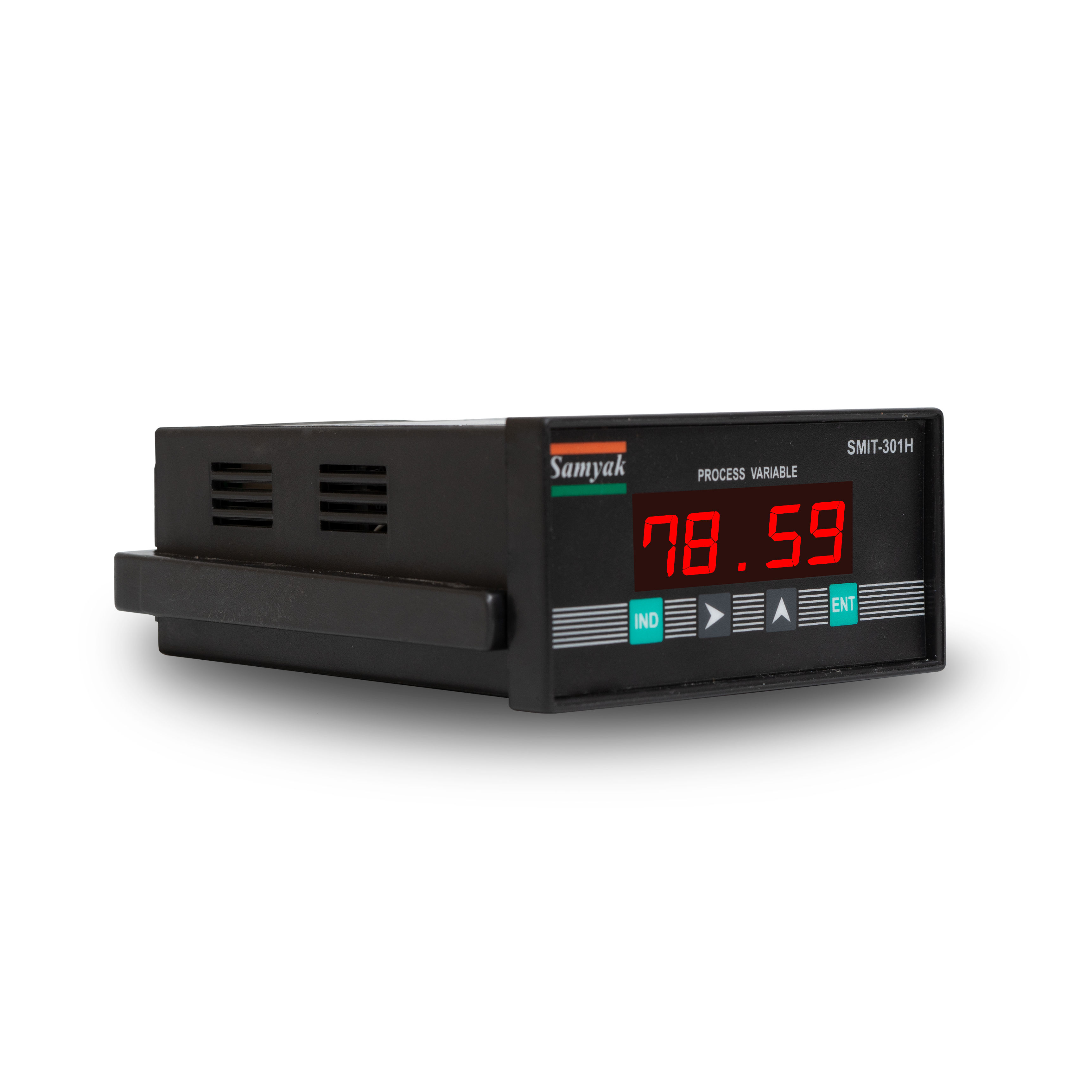
Process Indicator SMIT 301H
Price 10500.0 INR/ Piece
MOQ : 1 Piece
Process Indicator SMIT 301H Specification
- Classification
- MICROCONTROLLER BASED. Accepts Analog Input: 4-20 mA, 0-10 VDC, 0-5VDC. Four Keys Membrane Like Keypad.
- Weight
- 1 Kilograms (kg)
- Application
- Manufacturing and Automation, Chemical and Pharmaceutical Industries, Food and Beverage, Utilities and Energies, Water treatment plants
- Usage
- Manufacturing and Automation, Chemical and Pharmaceutical Industries, Food and Beverage, Utilities and Energies, Water treatment plants
- Product Type
- MICROCONTROLLER BASED
- Connection
- RS232 or RS-485 (2-wire), MODBUS protocol
- Dimension (L*W*H)
- 92 mm x 44 mm Millimeter (mm)
- Function
- It is an essential device that electronically displays real-time measurement values after receiving an analogue input signal, typically from sensors or transmitters.
Process Indicator SMIT 301H Trade Information
- Minimum Order Quantity
- 1 Piece
- Delivery Time
- 3 Week
- Main Export Market(s)
- Asia, Australia, Central America, North America, Middle East, Africa, South America, Eastern Europe, Western Europe
- Main Domestic Market
- All India
About Process Indicator SMIT 301H
Accepts Analog Input: 4-20 mA, 0-10 VDC, 0-5VDC
Four Keys Membrane Like Keypad
Display: 4-Digit Numeric 0.56 inch Red LED display for Process Variable
Operating: 24 VDC / 100-263VAC
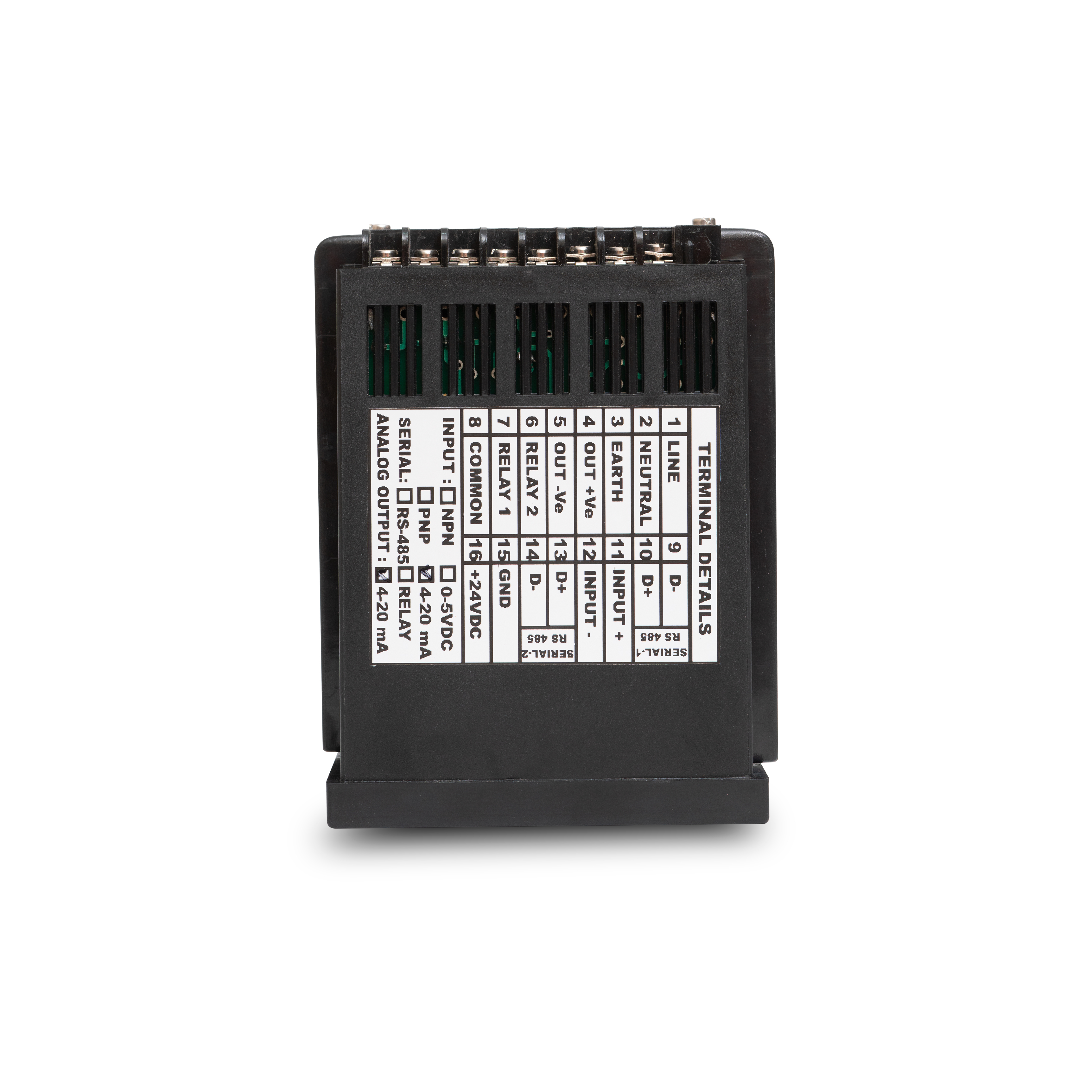
Transmitter Power supply: +24VDC/50mA
Programmable parameters: Zero, Full scale, Decimal position
Non-volatile Memory for storing configuration parameters
Calibration thro software
Options:
- Retransmission: 4 -20 mA / 0-10 VDC Isolated (Linear Proportional to Indication)
- Two Relays (5A/230VAC) for Alarm
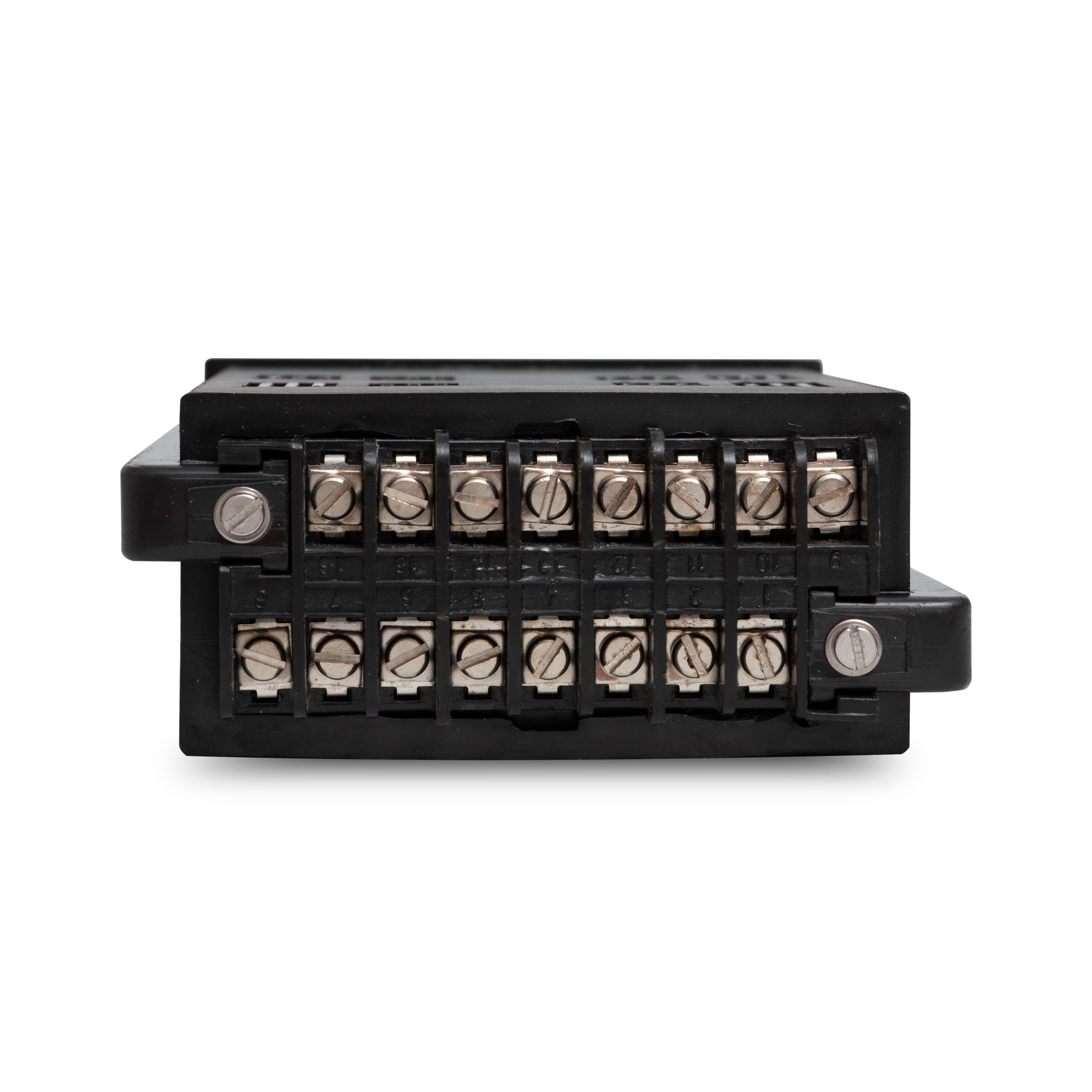
- Communication: RS232 or RS-485 (2-wire), MODBUS protocol
Mechanical Data:
Mounting: Panel mounting
- Cutout size: 92 mm x 44 mm
- Outer dimension: 96 mm x 48 mm x 120 mm (Depth)
Enclosure: Normal
Versatile Input Flexibility
The SMIT 301H accommodates a range of analog inputs4-20 mA, 0-10 VDC, and 0-5 VDCmaking it suitable for integration with multiple types of sensors and transmitters. This versatility allows industries to employ the device in numerous automation systems without requiring additional adapters.
Intuitive User Interface
Fitted with a four-key membrane keypad, the SMIT 301H ensures straightforward operation and quick parameter adjustments. Users can easily set up and calibrate the device, promoting efficient commissioning and minimizing downtime in demanding industrial environments.
Modern Connectivity and Protocols
The process indicator comes equipped with RS232 or RS-485 (2-wire) communications, supporting MODBUS protocol. This feature enables seamless connection with a range of supervisory and data acquisition systems, ensuring smooth integration in complex process monitoring architectures.
FAQs of Process Indicator SMIT 301H:
Q: How is the SMIT 301H process indicator typically installed in industrial setups?
A: The SMIT 301H is designed for panel mounting, using its compact dimensions of 92 mm by 44 mm. With a weight of 1 kg, it can be securely fitted into control cabinets or instrument panels found commonly in manufacturing, chemical, and utility plants.Q: What types of analog inputs does the SMIT 301H accept, and where is this beneficial?
A: This process indicator supports 4-20 mA, 0-10 VDC, and 0-5 VDC analog signals. Such flexibility proves advantageous in various settings like water treatment plants, food and beverage industries, and pharmaceutical manufacturing, where different sensors or transmitters are deployed.Q: When should the RS232 or RS-485 (MODBUS) connection be utilized?
A: RS232 or RS-485 connections should be used when real-time data needs to be communicated between the SMIT 301H and supervisory controls or SCADA systems. MODBUS protocol ensures interoperability with a wide array of industrial automation and monitoring platforms.Q: What process does the SMIT 301H follow to display measurement values?
A: Upon receiving an analog signal from a connected sensor or transmitter, the internal microcontroller processes this data and the device electronically displays real-time measurement values on its panel, allowing operators to monitor critical parameters promptly.Q: How can the keypad interface enhance device usage?
A: The four-key membrane keypad enables users to effortlessly configure settings, calibrate inputs, and navigate the indicators functions. This user-friendly design speeds up commissioning and ongoing adjustments during industrial operations, boosting productivity.Q: What are the primary benefits of using the SMIT 301H in automation applications?
A: Employing the SMIT 301H provides precise, real-time measurement monitoring, compatibility with various analog sensors, and simple integration into existing control systems, resulting in optimized operational efficiency and effective process supervision.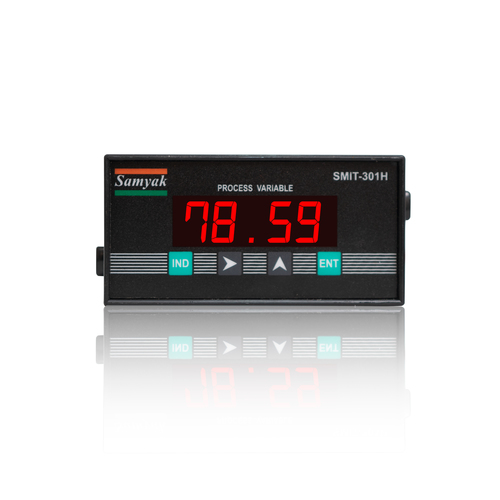
Tell us about your requirement

Price:
Quantity
Select Unit
- 50
- 100
- 200
- 250
- 500
- 1000+
Additional detail
Mobile number
Email

More Products in Process Indicator Category
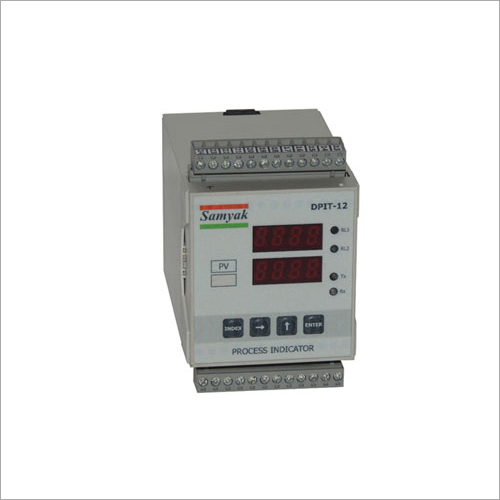
Process Indicator DPIT 12
Price 10500.0 INR / Unit
Minimum Order Quantity : 1 Piece
Product Type : Microcontroller based
Connection : Screw Terminal
Dimension (L*W*H) : 70 mm(W) x 75 mm(H) x 110 mm(D) Millimeter (mm)
Weight : Less than 1 kg Kilograms (kg)
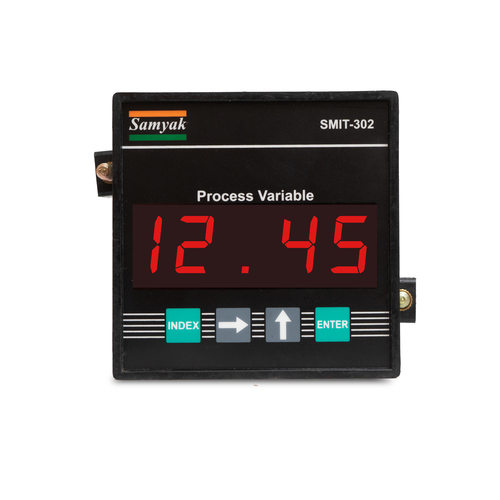
Process Indicator SMIT 302
Price 8500.0 INR / Unit
Minimum Order Quantity : 1 Piece
Product Type : Microcontroller based
Connection : RS232 or RS485 (2wire), MODBUS protocol
Dimension (L*W*H) : 92 mm x 92 mm Millimeter (mm)
Weight : 1 Kilograms (kg)
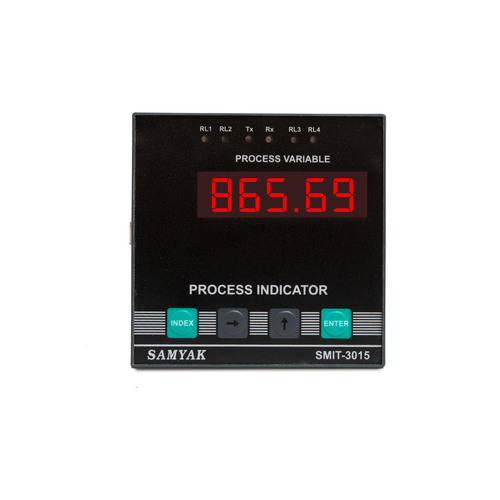
Process Indicator Controller (SMIT 3015 - 5 Digits)
Price 7500.0 INR / Unit
Minimum Order Quantity : 1 Piece
Product Type : Microcontroller based
Connection : RS232 or RS485 (2wire), MODBUS protocol
Dimension (L*W*H) : 96 mm x 96 mm x 120 mm (Depth) Millimeter (mm)
Weight : Less than 1 kg Grams (g)
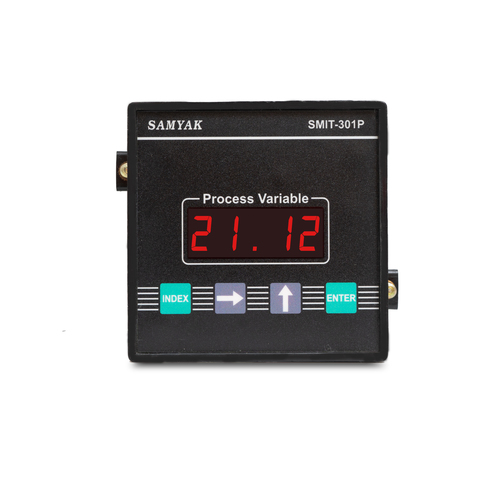
Process Indicator Controller (SMIT 301 P)
Price 7500.0 INR / Piece
Minimum Order Quantity : 1 Piece
Product Type : Microcontroller based
Connection : RS232 or RS485 (2wire), MODBUS protocol
Dimension (L*W*H) : 92 mm x 92 mm Millimeter (mm)
Weight : 500 Grams (g)

 Send Inquiry
Our Products


901, 9th Floor, SKD Surya ICON, AEC Cross Road, Naranpura,Ahmedabad - 380013, Gujarat, India

Mr Rushabh Gandhi
(Marketing Manager)
Mobile :07971459206
 Send Inquiry
 Send SMS
 Call Me Free
Developed and Managed by Infocom Network Private Limited.
