
Call us now :07971459206
 Send Inquiry
 Send Inquiry
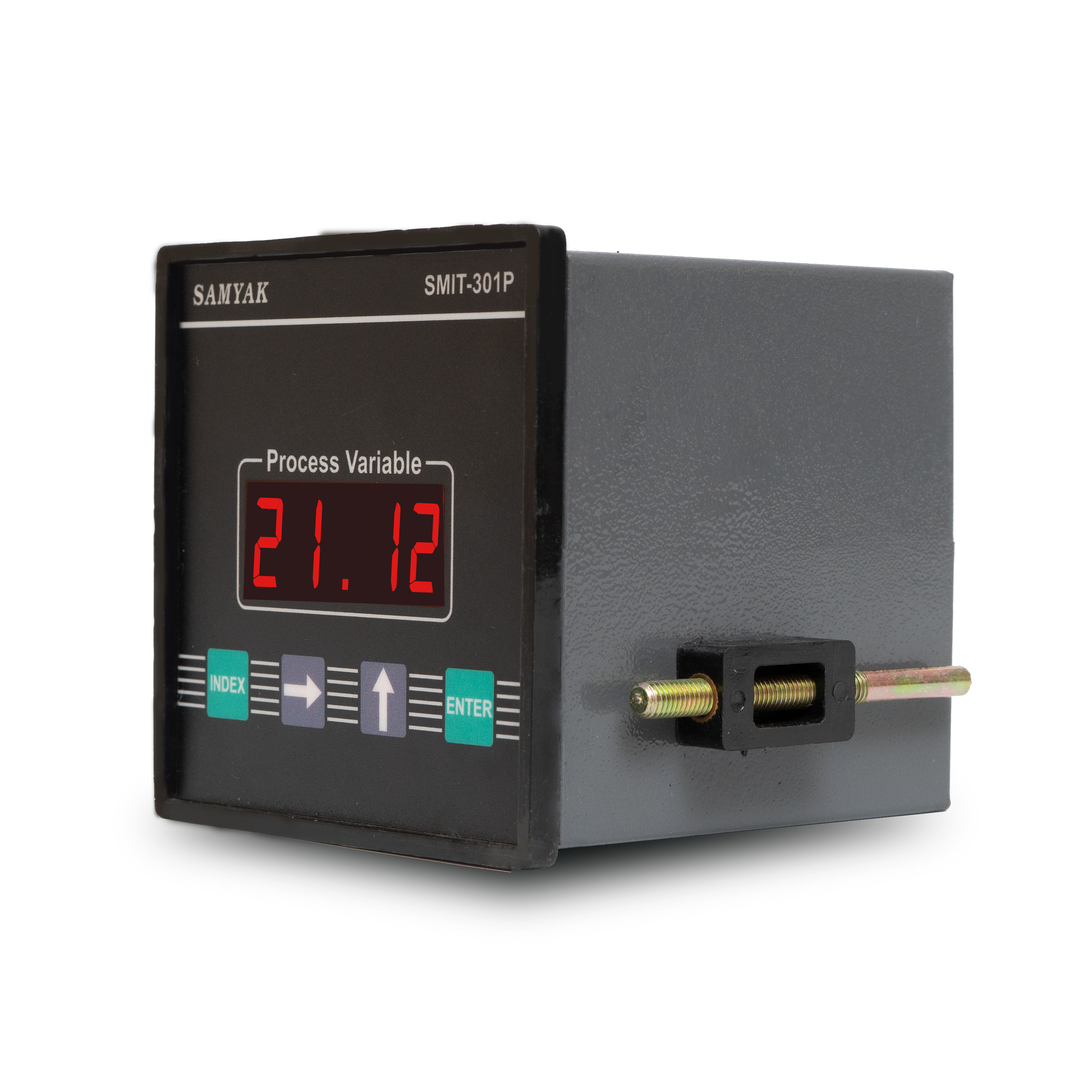
Process Indicator Controller (SMIT 301 P)
Price 7500.0 INR/ Piece
MOQ : 1 Piece
Process Indicator Controller (SMIT 301 P) Specification
- Connection
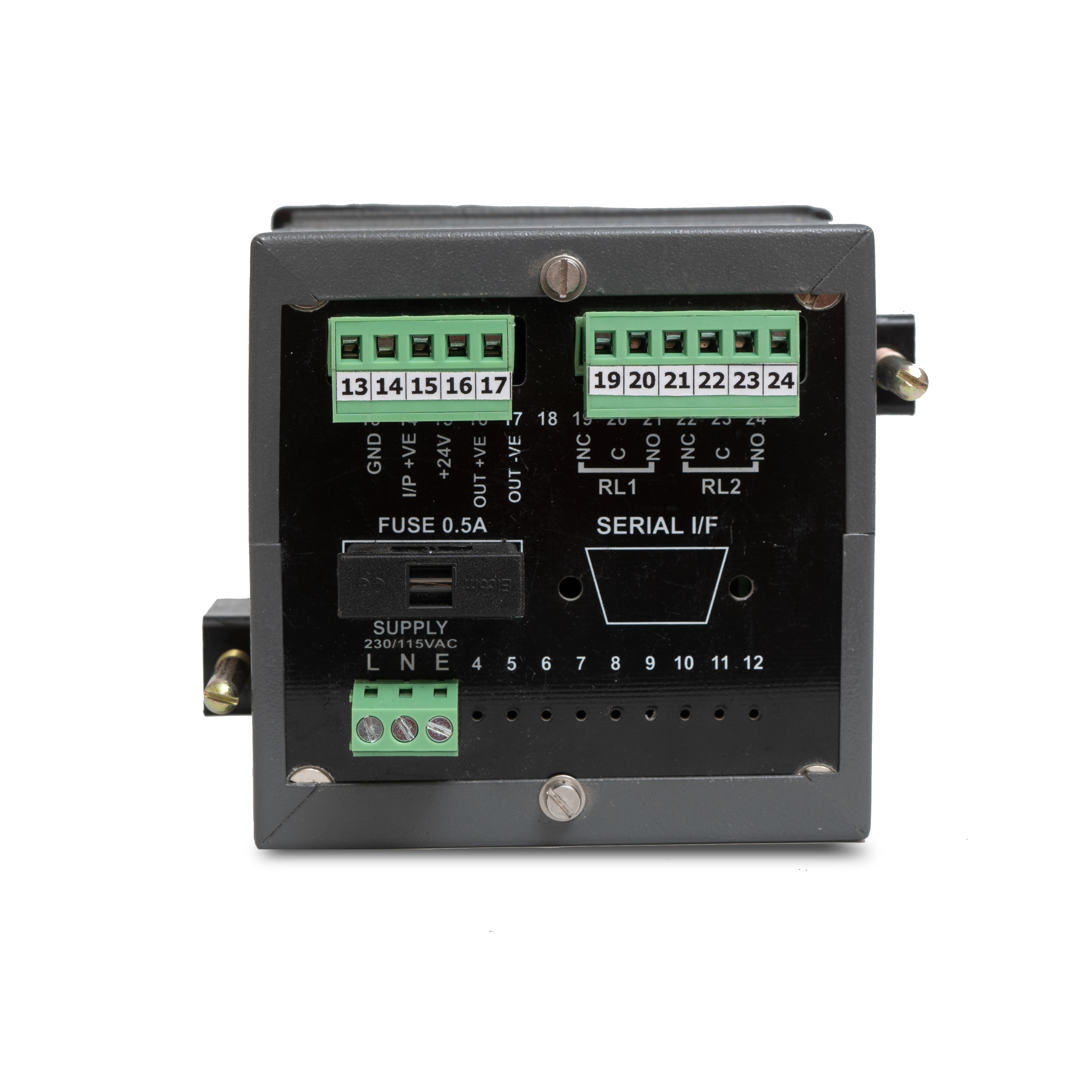
- RS232 or RS-485 (2-wire), MODBUS protocol
- Classification
- Microcontroller based. Programmable parameters: Zero, Full scale, Decimal position. Non-volatile Memory for storing configuration parameters.
- Weight
- 500 Grams (g)
- Application
- Temperature control, Process control, Flow control, Level monitoring
- Usage
- Temperature control, Process control, Flow control, Level monitoring
- Product Type
- Microcontroller based
- Dimension (L*W*H)
- 92 mm x 92 mm Millimeter (mm)
- Power
- 24 VDC / 100-263VAC Volt (v)
- Function
- Monitoring, Controlling, Output
Process Indicator Controller (SMIT 301 P) Trade Information
- Minimum Order Quantity
- 1 Piece
- Delivery Time
- 3 Week
- Main Domestic Market
- All India
Process Indicator Controller (SMIT 301 P) About
MICRO CONTROLLER BASED
- Accepts Analog Input: 4-20 mA, 0-10 VDC, 0-5 VDC
- Four Keys Membrane Like Keypad
- Display: 4-Digit Numeric 0.56'' Red LED
- Operating: 24 VDC / 100-263VAC
- Transmitter Power supply: +24VDC/50mA
- Programmable parameters: Zero, Full scale, Decimal position
- Non-volatile Memory for storing configuration parameters
- Calibration thro software
Options:
- Retransmission: 4 -20 mA / 0-10 VDC Isolated (Linear Proportional to Indication)
- Two Relays (5A/230VAC) for Alarm
- Communication: RS232 or RS-485 (2-wire), MODBUS protocol
- Mechanical Data: Mounting: Panel mounting
- Cutout size: 92 mm x 92 mm
- Outer dimension: 96 mm x 96 mm x 120 mm (Depth)
- Enclosure: Normal
Advanced Control for Varied Applications
The SMIT 301 P stands out with its ability to monitor and control processes such as temperature, flow, and level, making it a vital tool in industries requiring precise regulation. Its adaptability to different input values and programmable features ensures that it can be tailored to meet unique system requirements with ease.
Flexible Integration & Communication
Equipped with RS232 and RS-485 communication options and supporting MODBUS protocol, the controller integrates smoothly with existing industrial automation systems. Whether in a standalone setup or as part of a broader network, real-time data and control are assured.
FAQ's of Process Indicator Controller (SMIT 301 P):
Q: How does the SMIT 301 P Process Indicator Controller help in process automation?
A: The SMIT 301 P automates monitoring and control for parameters such as temperature, flow, and level. By supporting programmable settings and real-time data communication via MODBUS, it reduces manual intervention and ensures processes operate efficiently and reliably.Q: What are the main benefits of using this controller for industrial applications?
A: This controller offers precise control, robust data retention through its non-volatile memory, and easy parameter configuration. Its versatility makes it suitable for a wide array of industrial applications, enhancing process stability and operational productivity.Q: Where is the SMIT 301 P typically installed in a process setup?
A: The SMIT 301 P is commonly installed in control panels or operator stations of process industries where it can directly interface with sensors and transmitters, providing monitoring and control over critical process variables.Q: What type of communication protocols and connections does the controller support?
A: It supports both RS232 and RS-485 (2-wire) communication options, utilizing the widely adopted MODBUS protocol for seamless connection with various industrial devices and supervisory systems.Q: How can existing configurations be retained during power interruptions?
A: The device is equipped with non-volatile memory that securely stores configuration parameters such as zero, full scale, and decimal position, ensuring that all programmed values are preserved even if the power supply is lost.Q: When should you use the programmable parameters of the controller?
A: Programmable parameters like zero, full scale, and decimal position should be set during initial installation or when the process requirements change. Adjusting these ensures accurate measurement and control tailored to the specific application needs.Q: What is the process for integrating the SMIT 301 P into a MODBUS network?
A: To integrate the controller, connect it via RS232 or RS-485 as required, assign a unique MODBUS address, and configure the necessary communication settings. Once integrated, it can exchange data and receive commands from central supervisory systems or HMIs.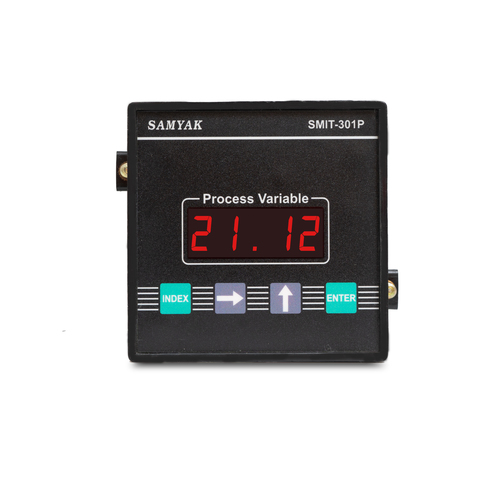
Tell us about your requirement

Price:
Quantity
Select Unit
- 50
- 100
- 200
- 250
- 500
- 1000+
Additional detail
Mobile number
Email

More Products in Process Indicator Category
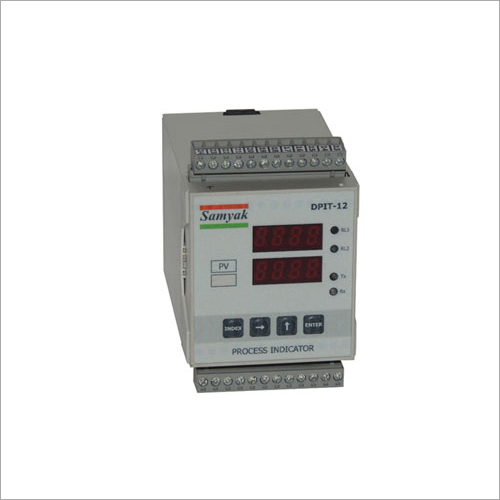
Process Indicator DPIT 12
Price 10500.0 INR / Unit
Minimum Order Quantity : 1 Piece
Function : Process Indicator
Weight : Less than 1 kg Kilograms (kg)
Application : Weight Indicator, Field mountable isolator: single channel or dual channel, Analog to serial converter
Dimension (L*W*H) : 70 mm(W) x 75 mm(H) x 110 mm(D) Millimeter (mm)
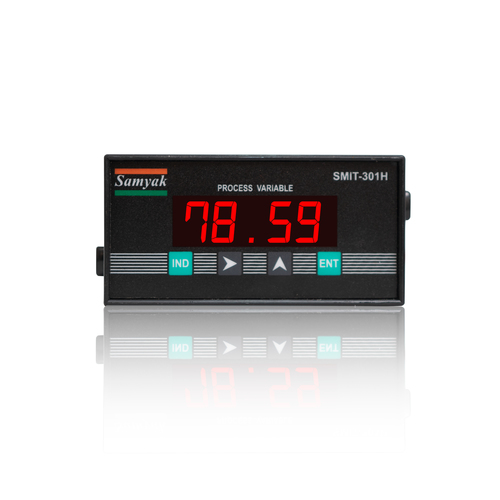
Process Indicator SMIT 301H
Price 10500.0 INR / Piece
Minimum Order Quantity : 1 Piece
Function : It is an essential device that electronically displays realtime measurement values after receiving an analogue input signal, typically from sensors or transmitters.
Weight : 1 Kilograms (kg)
Application : Manufacturing and Automation, Chemical and Pharmaceutical Industries, Food and Beverage, Utilities and Energies, Water treatment plants
Dimension (L*W*H) : 92 mm x 44 mm Millimeter (mm)
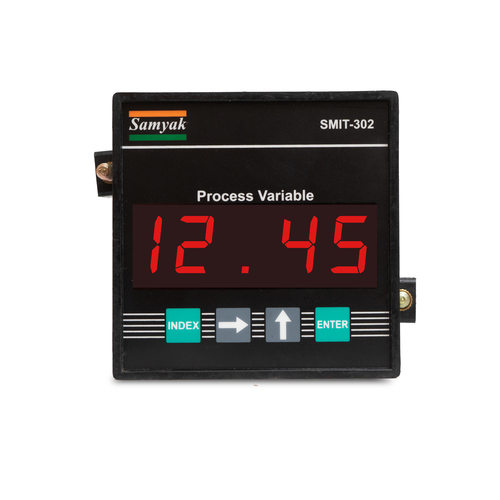
Process Indicator SMIT 302
Price 8500.0 INR / Unit
Minimum Order Quantity : 1 Piece
Function : Programmable parameters: Zero, Full scale, Decimal position. Nonvolatile Memory for storing configuration parameters. Four Keys Membrane Like Keypad. Microcontroller based.
Weight : 1 Kilograms (kg)
Application : A devices is to display realtime measurements of variables like temperature, pressure, or flow rate in industrial.
Dimension (L*W*H) : 92 mm x 92 mm Millimeter (mm)
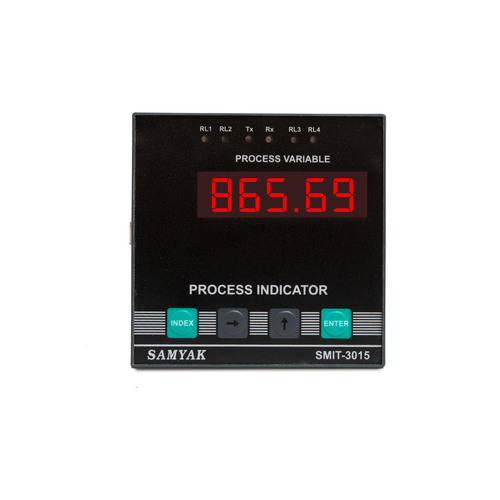
Process Indicator Controller (SMIT 3015 - 5 Digits)
Price 7500.0 INR / Unit
Minimum Order Quantity : 1 Piece
Function : It measures and displays the current value of a process variable, such as temperature, pressure, or flow rate, often from a connected sensor.
Weight : Less than 1 kg Grams (g)
Application : They are used in a wide range of industries for monitoring, and sometimes controlling, various industrial processes.
Dimension (L*W*H) : 96 mm x 96 mm x 120 mm (Depth) Millimeter (mm)

 Send Inquiry
Our Products


901, 9th Floor, SKD Surya ICON, AEC Cross Road, Naranpura,Ahmedabad - 380013, Gujarat, India

Mr. Rushabh Gandhi
(Marketing Manager)
Mobile :07971459206
 Send Inquiry
 Send SMS
 Call Me Free
Developed and Managed by Infocom Network Private Limited.
 English
 Spanish
 French
 German
 Italian
 Chinese (Simplified)
 Japanese
 Korean
 Arabic
 Portuguese